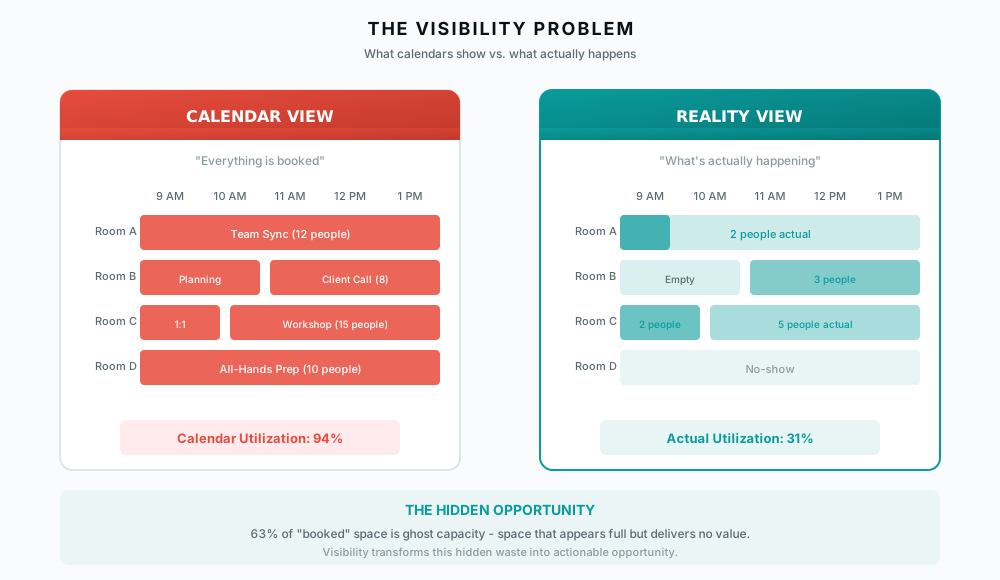
Abstract: Most organizations have a visibility problem, not a space problem. Walk through a modern office and you will see conference rooms booked solid but half-empty, desks assigned to people rarely present, and expensive corners that serve mainly as decor. Detailed space utilization data changes everything. It turns "how we think the building is used" into "how it is actually used," and gives you levers that show up on a P&L.
Walk through a modern office on a Tuesday and you will see it instantly: conference rooms booked solid, desks assigned to people who are rarely present, collaboration areas that look busy from a distance but are mostly pass-through, and entire corners that exist mainly as expensive decor.
If you manage real estate, you can feel the waste, but you cannot quantify it. And if you cannot quantify it, you cannot manage it profitably. Space becomes a fixed cost you negotiate every few years instead of an asset you continuously optimize.
Detailed space utilization data changes that. It turns "how we think the building is used" into "how it is actually used," and it gives you levers that show up on a P&L.
This is about measurement at the level of patterns, not people. The goal is to make spaces behave more like managed systems and less like assumptions frozen into drywall.
Why Utilization Data Matters
A building is a portfolio of micro-assets: rooms, zones, desks, corridors, amenity areas. Each has a cost to lease, build, maintain, heat, cool, clean, secure, and furnish. Each has an implied purpose. Most have a utilization rate that is guessed at, debated in meetings, and then forgotten.
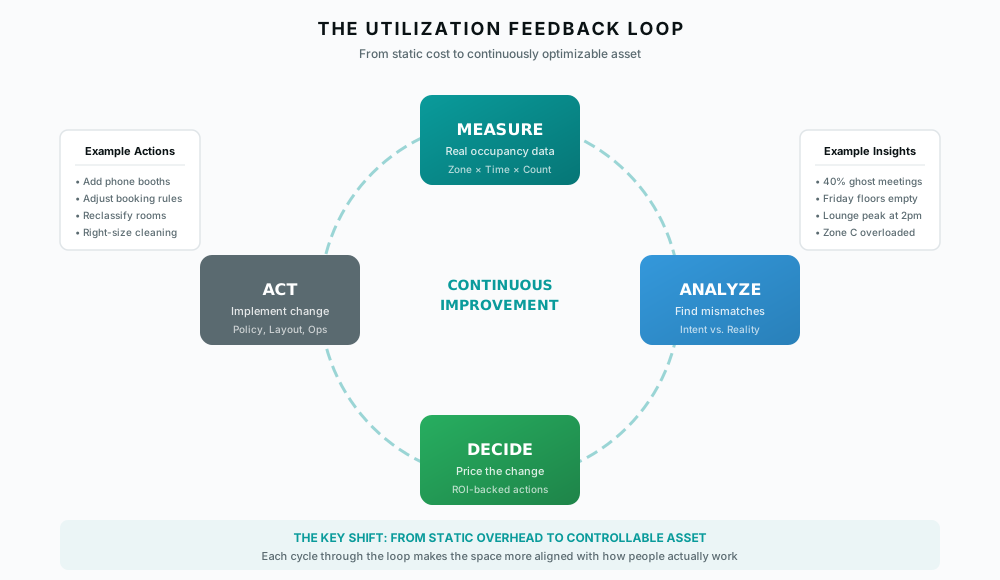
Utilization data does three practical things:
- It exposes mismatches between intent and reality.
- It converts those mismatches into decisions you can price.
- It creates a feedback loop so the space improves over time.
Once you have the loop, the building stops being a static overhead line item. It becomes a controllable asset.
Example 1: Ghost Meetings and the True Cost of a Conference Room Hour
One of the most common problems in modern offices is the "ghost meeting."
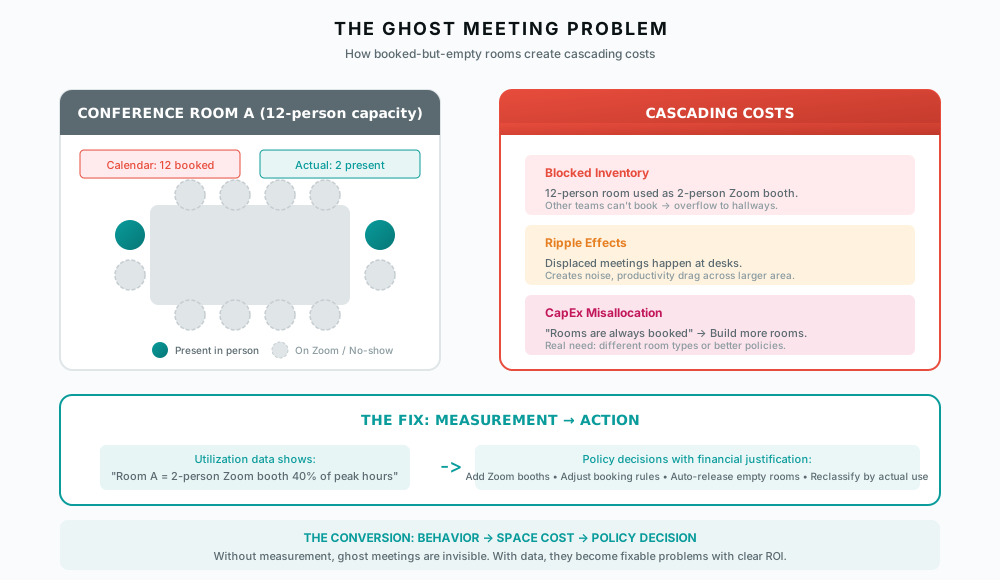
A room is booked for 12 people. The calendar says "full." But in reality, two people show up in person and everyone else joins from Zoom. The room sits half-used, or nearly unused, while other teams cannot find space and overflow into hallways or cafes.
The loss goes beyond inconvenience. It is economic.
Here are a few ways it becomes real money:
- Opportunity cost of blocked inventory: conference rooms are scarce inventory. If "high-capacity" rooms are repeatedly used as two-person Zoom booths, you effectively reduce your usable capacity without realizing it.
- Ripple cost of overflow: teams that cannot find rooms take meetings at desks, creating noise and productivity drag across a larger area.
- CapEx misallocation: leadership sees "rooms are always booked" and responds by building more rooms, when the actual need is different room types or better policies.
Utilization data lets you tag a ghost meeting pattern without reading calendar text or tracking individuals. You simply see: booking says full, real presence says sparse.
Then you can tie it to dollars in plain terms:
- "This 12-person room is effectively used as a 2-person room 40% of the time during peak hours."
- "That displaces X hours of true 12-person usage per month."
- "To satisfy that displaced demand, we would otherwise need Y additional rooms or additional leased square footage."
The exact equation matters less than the principle: you now have a measurable conversion from behavior to space cost.
It becomes a policy decision with a financial justification: adjust booking rules, add smaller booths, reclassify rooms by actual usage, or introduce a release mechanism when rooms are booked but not occupied.
Example 2: Right-Sizing Cleaning and Operations Without Reducing Service
A lot of building spend scales with square footage because it is the easiest proxy.
Cleaning, security patrols, consumables, even maintenance schedules often assume that every space is equally used. But any operator knows that is false. Usage is lumpy. Certain areas take a beating. Others are almost never touched.
Detailed utilization data lets you manage operations based on load rather than floor area.
Practical outcomes:
- Clean where people actually are, more often.
- Reduce frequency where usage is low without degrading experience.
- Allocate staff by real demand patterns, not static schedules.
This is one of those changes that feels small but compounds.
If a particular floor is used heavily on Monday through Wednesday and goes quiet on Friday, your operations schedule can reflect that. You stop paying for a uniform service level in a non-uniform world.
The economic value shows up as:
- lower labor hours wasted in low-use zones
- better cleanliness where it matters most, which reduces complaints and rework
- a more stable service experience without increasing spend
Example 3: Turning "Amenities" into Managed Revenue Drivers
Amenities are often treated like brand statements: cafes, lounges, training rooms, wellness spaces.
They are expensive. They are also frequently underutilized or utilized in the wrong way.
Utilization data allows you to treat amenities as assets with measurable return:
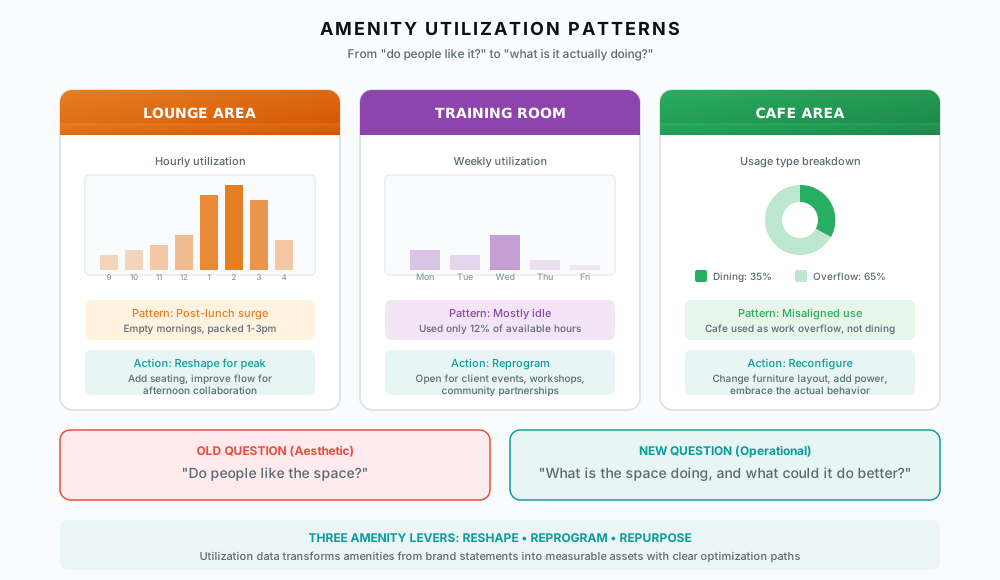
- If a lounge is empty most days but packed during certain hours, you can reshape it to serve those peak behaviors.
- If a training space sits idle, it may become bookable for client events, internal workshops, or community partnerships.
- If a cafe is used as overflow seating rather than dining, you can change furniture layout and adjacency to reduce friction.
For many real estate teams, the conversation is usually aesthetic: "Do people like the space?"
With utilization, the conversation becomes operational: "What is the space doing, and what could it do better?"
That is where profitability starts to appear. Better amenities can reduce attrition, improve recruiting, and increase time-in-office for hybrid organizations. But even before those longer-term benefits, there are immediate levers: reconfigure, reprogram, or repurpose underperforming zones.
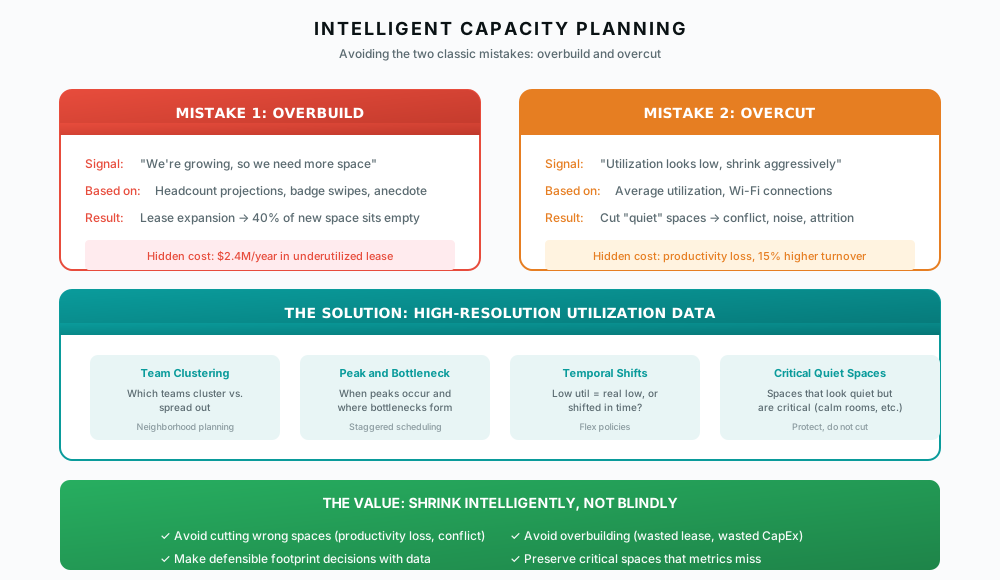
Example 4: Capacity Planning That Avoids the Two Classic Mistakes
Without good utilization data, organizations tend to make one of two errors:
- Overbuild: "We are growing, so we need more space."
- Overcut: "Utilization looks low, so we can shrink aggressively."
Both are risky because both are based on weak signals: badge swipes, Wi-Fi connections, calendar bookings, and anecdote.
High-resolution utilization data lets you see patterns that matter:
- Which teams cluster and which spread out
- When peaks occur and where bottlenecks form
- Whether low utilization is real or simply shifted in time
- Whether certain spaces are critical even if they look quiet (for example, calm rooms, private spaces, nurse stations, support corridors)
This is how you avoid cutting the wrong space and creating hidden costs: productivity loss, conflict over rooms, increased noise, lower employee satisfaction.
The value lies in shrinking intelligently, not just shrinking.
The Deeper Point: Space Is a Product
Once you have utilization data, the building stops being a static container and starts behaving like a product you can iterate.
- You can test a layout change and see if flow improves.
- You can add phone booths and watch ghost meetings drop.
- You can tune policies to match real demand.
- You can invest in the spaces that create value and stop investing in the ones that do not.
That is how "smart space" becomes profitable space.
By giving operators the same thing every good product team depends on: feedback.
Closing Thought
Hybrid work exposed that most offices were never measured well.
We built them based on assumptions about how people would behave. Then behavior changed. The assumptions stayed.
Detailed space utilization data is a way to bring the building back into alignment with reality. And when that happens, the economics become controllable again.
Ghost meetings become fixable. Cleaning becomes right-sized. Amenities become intentional. Footprint decisions become defensible.
In the end, the value is simple.
When you can see how space is used, you can stop paying for myths and start investing in what works.